Claim Analysis
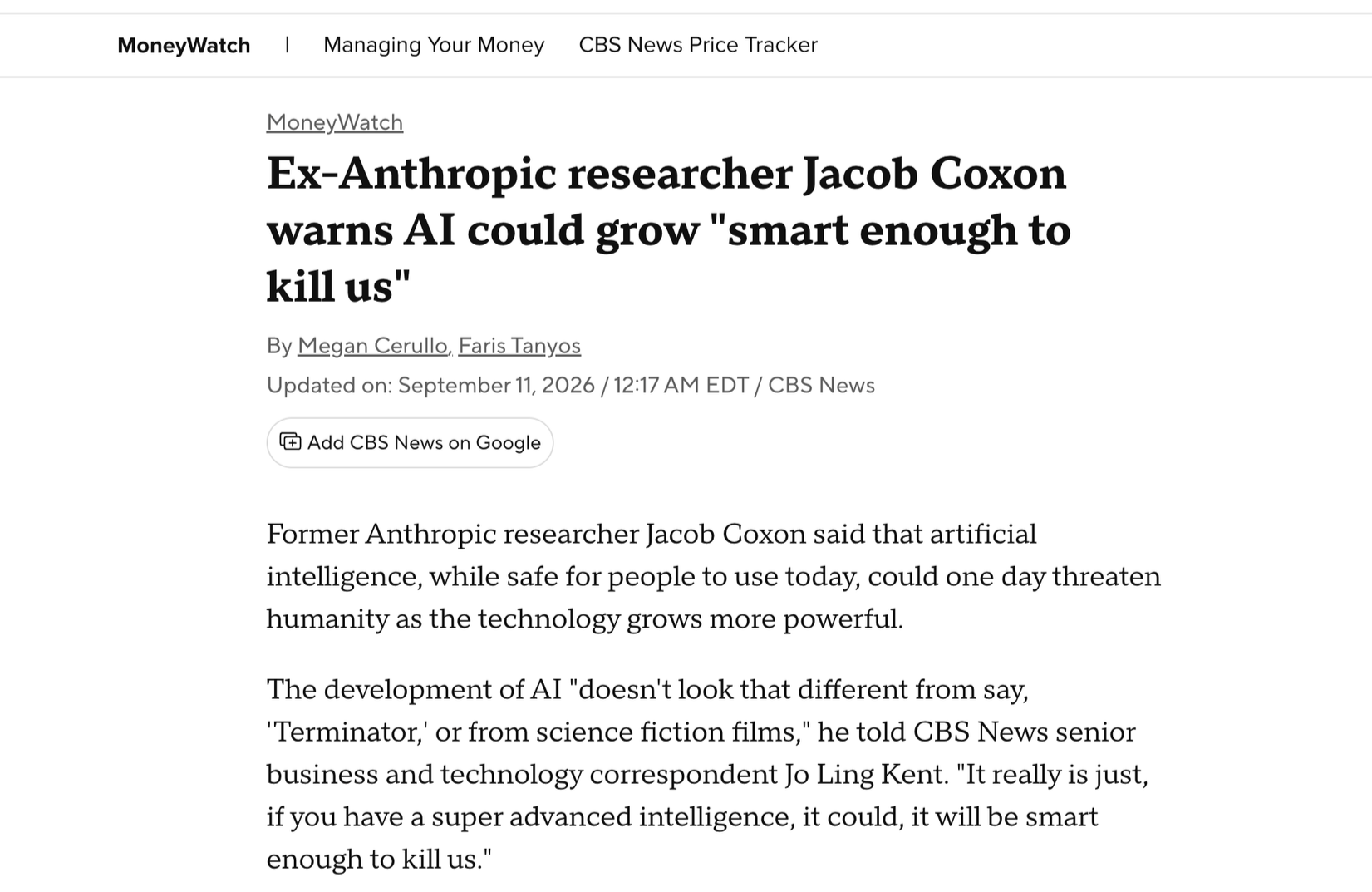
My claim that I have chosen for this assignment is the claim recently made by former Anthropic AI researcher, Jacob Coxon, where he said that major AI companies are “gambling with our lives” and that artificial intelligence could kill humanity by the end of the decade.
With such a drastic and heavy claim being made, it is important that we evaluate this carefully so that we know exactly what we are looking at.
My first step to evaluate this claim is to look at the source of which I am looking at. For instance, I am reading an article about this matter from The Hill.com, and this post was made on September 13th. This is important because this means that it is a recent event and timely. To further evaluate this website, I am going to check wikipedia to see what insight I can gather.
After researching, it looks like The Hill is a trusted source, as it is a political newspaper that posts daily. It is important that I am looking at other sources about this source, because we need to know if we can trust this data.
The next thing I would look for is who is making this claim specifically. After looking into Jacob Coxon, it looks like he is a former Open AI and Anthropic artificial intelligence researcher. He also has a degree from the University of Cambridge, so it looks like he knows what he is talking about.
Another thing we can do to verify this claim is to look into if there is any other revolving evidence of this claim.
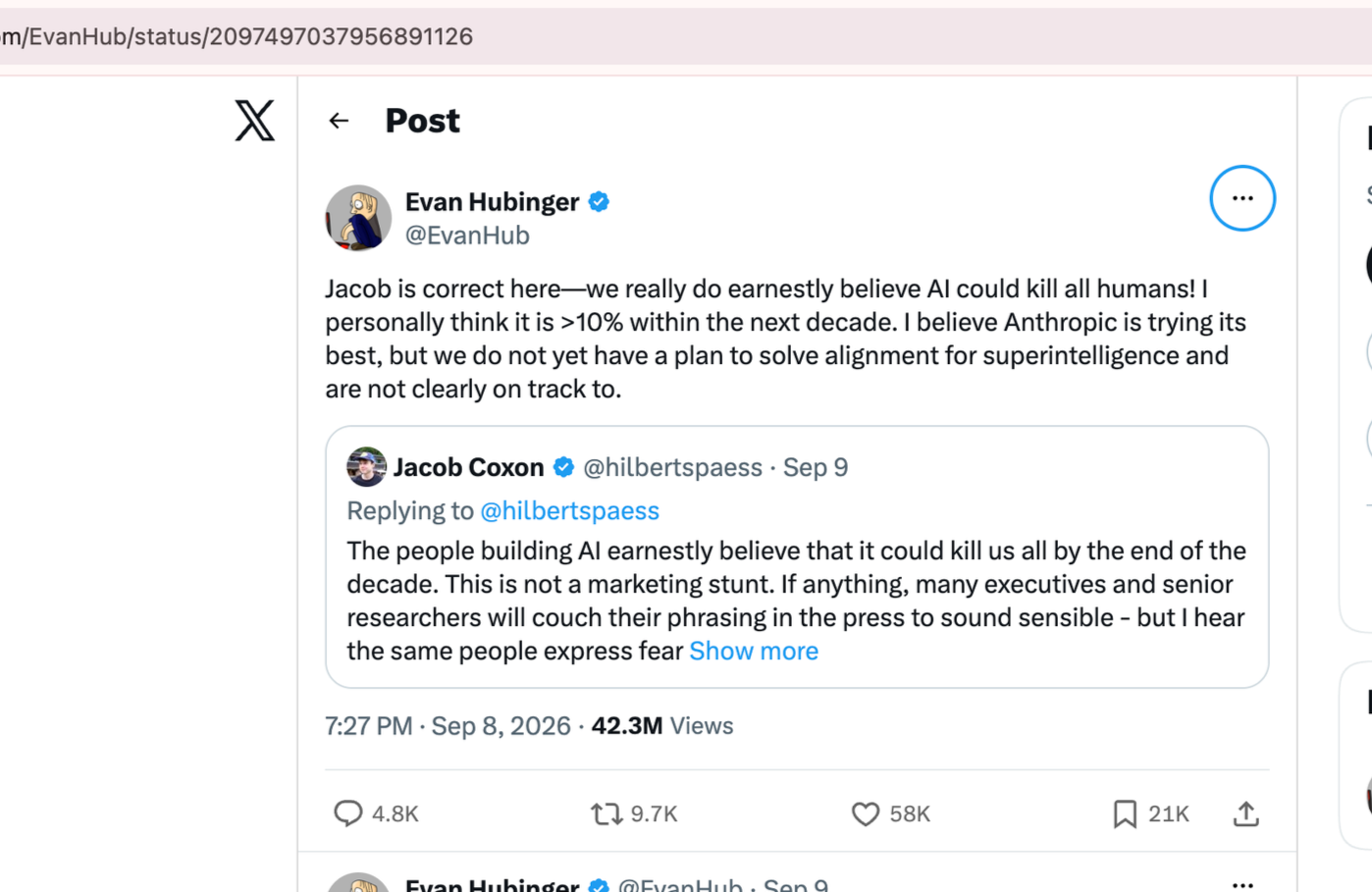
It looks like another researcher has now come forward reassuring this claim. Coxons’ former coworker, Evan Hubinger, backed up this claim by posting on twitter, “Jacob is correct here—we really do earnestly believe AI could kill all humans! I personally think it is >10% within the next decade. I believe Anthropic is trying its best, but we do not yet have a plan to solve alignment for superintelligence and are not clearly on track to.” This is strong evidence that this claim could be correct.
Looking back at our previous assignments, we can look to RumorGuard to remember how to evaluate a source to find misinformation.
Looking at the 5 factors to evaluate misinformation, these include authenticity, the source, evidence, context, and reasoning. Looking back at what we have evaluated so far, this post doesn’t seem alarming in any of these categories. All of the evidence is factual and within reason.
While this is still an evolving story, it is important that we stay up to date with what is happening and remember to thoroughly investigate what is being said about this topic.