Battling Misinformation - two essential platforms to do so.
With an uproar of misinformation that is constantly being spread and promoted all across our media, it is important that we have tools to help us identify it for what it is. With two recent tools coming out to help us do so, it is important that we take a moment to go in depth to see how it is helping our society.
Tool #1: RumorGuard by the News Literacy Project.
This tool was created in order to help the younger generation (specifically K-12) to pinpoint misinformation and learn how to avoid it. The website provides 3 major categories of discussion - Conspiritual thinking, False Content, and AI. Each category has current and up to date stories that fall into the category.Each post evaluates the story and explains why it is misinformation. it provides key takeaways and 5 factors that confirm that it is fake. These factors go as follows:
Authenticity: Is it authentic?
Source: Has it been posted or confirmed by an official source?
Evidence: Is there evidence that proves its claim?
Context: Is the context accurate?
Reasoning: Is it based on solid reasoning?
With these deciding factors, it helps students learn what to look for when identifying misinformation. Mashable.com states, “it offers a one-stop shop for misinformation debunking and a glimpse into the fact-checking process, on top of a library of authoritative tools to help individuals spot, verify, and fight against rapidly spreading misinformation themselves.” I would definetly say that this is a very effective tool in teaching people how to spot misinformation.
Tool #2: Bad News Game
This game was created in order to help people understand how and why misinformation is spread so easily. It addresses specific tactics that people use in order to spread these lies. In the game, you play as someone who is meaning to spread misinformation. The goal of the game is to make sure that your followers of your website find you credible enough to believe anything you say. You can successfully do this by following the tactics that they give you. These tactics go as follows.
Impersonation: disguising who you are (most people do not pay attention to the source)
Emotion: Playing into negative emotions strongly.
Polarization: Finding existing situations and blowing them out of proportion.
Conspiracy: The idea that large events are orchestrated by a large group/organization.
Discredit: Deflects attention of you, onto your opponents.
The game does a great job of showing what happens when you use these tactics to spread false messages. It also helps the audience understand that these are things to keep an eye on when identifying misinformation. I would definitely say that this ia reliable tool in teaching people what misinformation stems from and how we can identify it.
Overall, I would say that both of these games are very good ways to learn about the spread of misinformation and how to tackle it. I think that educational games like this can be very interactive and fun, making the student or person playing it feel more capable of understanding the true message.
Sources:
(n.d.). Bad News Game. Get Bad News. Retrieved September 4, 2026, from https://www.getbadnews.com/en
News Literacy Project (n.d.). RumorGuard. Retrieved September 4, 2026, from https://www.rumorguard.org/
Mashable (n.d.). New debunking site might be the winning tool in those frustrating Facebook fights. Retrieved September 4, 2026, from https://mashable.com/article/misinformation-debunk-website-rumorguard
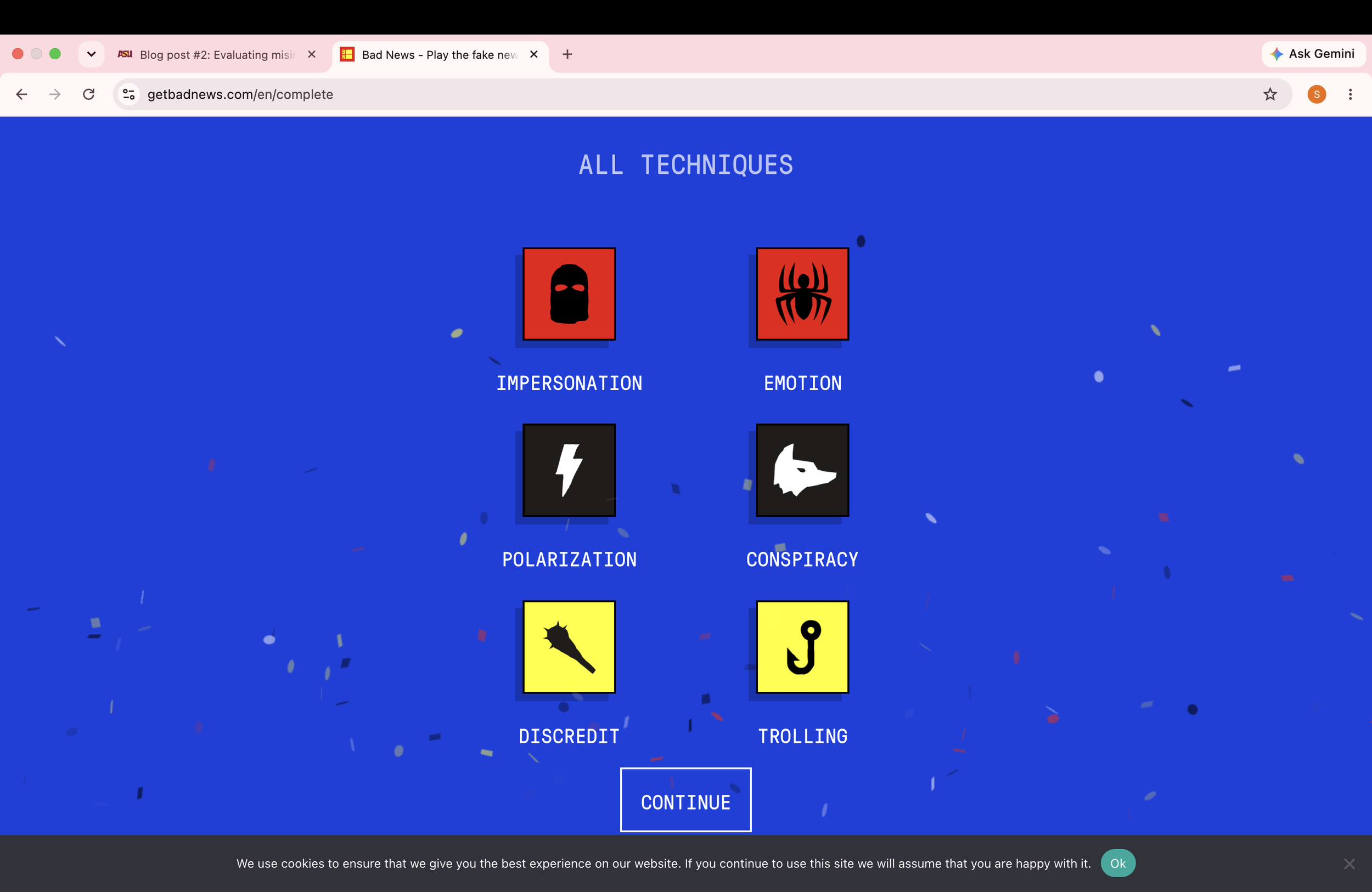
Bad News Gameplay.
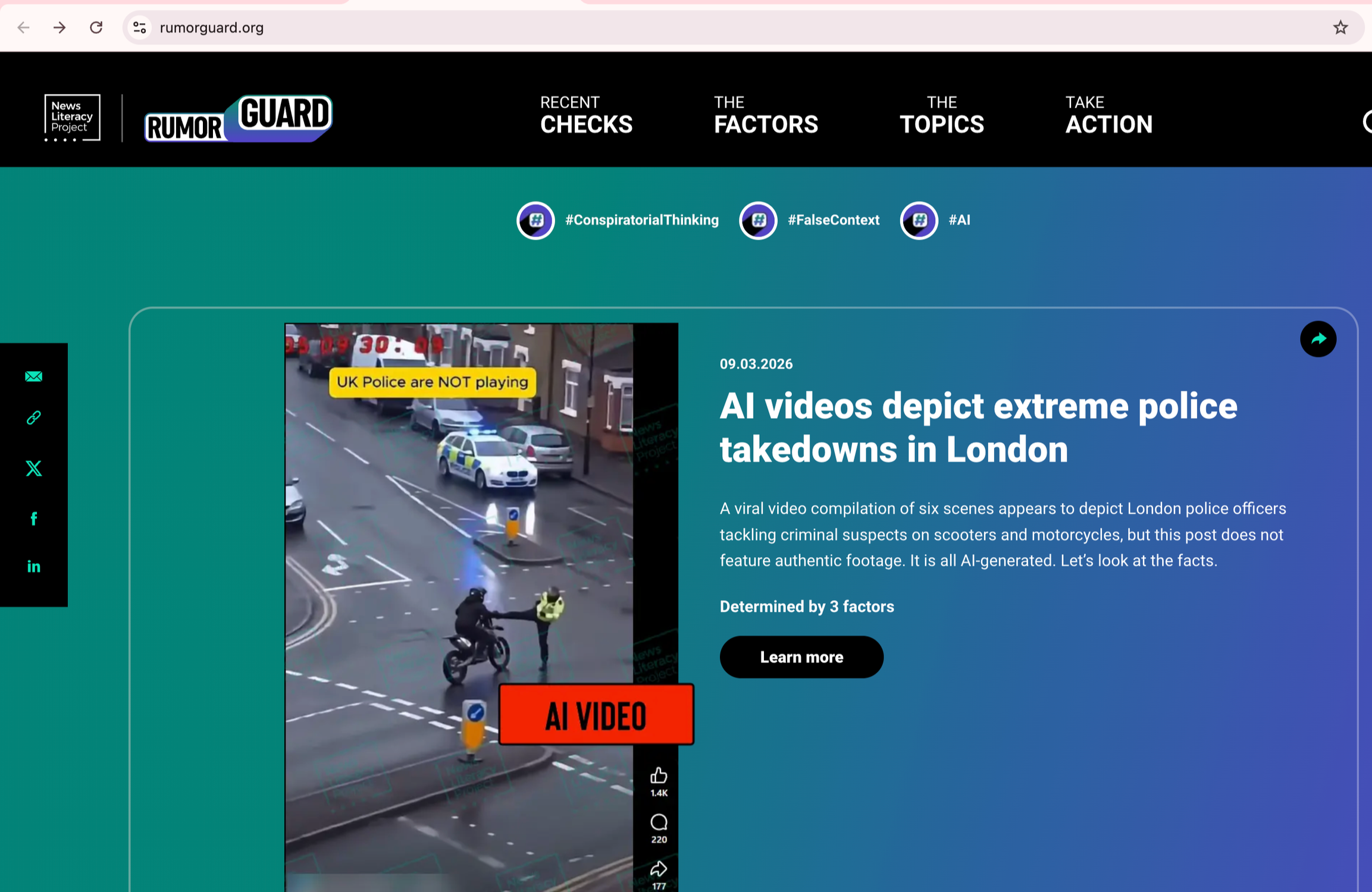
RumorGuard Website.